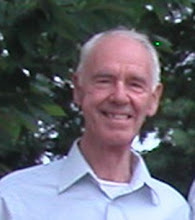
One very rainy day Charlie Thrall and I were coming home on my bicycle (he was riding "side saddle"). We were heading south on the state road, and in a hurry to get out of the rain. So I got the bright idea to take a short cut through Skinner's lane that connects direct to Skinner Road. We followed the wheel tracks down hill going quite fast in blinding rain, going around a corner, and too late spotted a barbed wire right across the lane! We hit it broadside, and it gave way. We never stopped, but we both got gashes on our hands and arms that left scars to this day.
Almost all farm families around belonged to the Grange. But Dad wouldn't join because it had the element of a secret society, and he was against that. There was a secret password used.
He did however belong to the Ellington-Vernon Farmer's Exchange Co-op. This is how we got all our grain. At one point some time later he was President of the Co-op.
He would clean chickens at the kitchen table. Not a job he liked. He used to make a very disagreeable face especially when pulling the guts out of a chicken. But as a little boy, it was a facinating thing for me to watch. Much later during the war, he and I were in the manure pit loading the manure spreader. Neither of us liked the job but it had to be done. I asked him what he thought our time was worth, doing this job. He said "About two cents an hour". I asked him how long he thought the war would last. He thought about 10 years. That did it for me. I could not face shovelling manure for 10 years. So I started to think along other lines, such as the U.S. Navy.
When I was still quite young I was attracted to two things, fire and electricity. I started a little fire in the entryway to the wood shed. It attracted my parents attention. They were, one could say, "dumbfounded". So much so that I didn't get a spanking. But a serious talking to. This corrected my thinking that "it was just a little fire". So after that it was always my turn to burn garbage in the big steel drum.
I used to collect all the old flashlight batteries. I made a rig to put them all in series, and used it to light a flashlight bulb. It was fun that the more batteries, the brighter the light. Then I learned another lesson the hard way. I once got just too many batteries, and the light lit exceedingly bright, then went out.
While I was in High School, or maybe 8th grade, Dad built a big addition to the barn, doubling the capacity for milk cows. He worked on the building, so did the hired man, and he also hired others, including Emil Lee. He got the building material by tearing down a portion of the tobacco shed. By then we also had electricity, so we also got an electric pump and had running water. Not much later he also built a silo, so we had ensilage for the cows through the winter.
As I have mentioned, I had an antenna running from near the top of the tall Norway spruce tree down to the outside of my window. Well, one summer night during a thunder storm, lightening hit just under my window with a terrible crash, breaking a lot of vacuum tubes in a basket on the floor, and blasting bits of clapboard halfway to the barn. So I revised the set up, had the antenna terminate much lower, put in a lightening arrestor, etc.
I must go now.
Tuesday, November 13, 2007

More Odds & Ends
Summers, say from age 7 through 12 was a wonderful time. I spent many hours over in the pasture, playing in the brook. There were fishes and water spiders. I built dams and canals and had boats and things of which I was very proud, and tried to get Mother & especially Dad to come over to the brook to see all my wonderful work, but it wasn't easy as they were always so busy.
There was even a cave that I used for experimenting with a corn-cob made pipe and corn silk. Yuck!! Then with tobacco from old cigarettes picked up from the road. Double Yuck!!! So I never developed a taste for such stuff.
Our farm consisted of different sections, all contiguous except for the wood lot. They had been acquired at different times by my grandparents, and later somewhat the same, us from him. There was the following:
The First Lot ------ consisting of the northwest corner of Skinner Road and Dart Hill Road, with the house, barn, shop-woodshed-outhouse combination, four attached chicken houses with grain room in middle, garage, milk house, one brooder coop, and sometimes 4 brooder coops (smaller chicken coops on skids that can change locations). Behind the big four attached chicken houses with grain room was our vegetable garden, and north of it was a permanent large field of asparagus, and a large strawberry bed that changed locations from year to year. All this was due north of the aforementioned large chicken coop string, and extended all the way to the second lot. But to the west of this complex was usually a hay lot, and it may have bordered Gunthers, if they owned that land. Later a southwest section of this lot was sold, somewhat reluctantly I believe, to Hincks, by their request, for a place for them to retire. Later Hincks sold it to an older couple, Nels Carlsen & his wife. He worked in a shoe store in Manchester that had an X-ray machine where you could see your feet inside the shoe. He thought it was wonderful, but my Dad wouldn't let me use it. Later Mr. Carlsen went blind.
The Second Lot ------ just north of the first lot was divided from the first lot by a fence and a barway. It was also a hay lot, and it may have bordered Newmarker's land to the west.
The Third Lot was north of the Second Lot, also divided from it by a fence and a barway. It may have bordered Natziski's to the west, and it bordered Luther Skinner's land to the north. All these lots were primarily haylots, with occasional use for pasture.
Then there were the Penny lots that Grandpa Blankenburg had purchased from the Penny's. I believe I have original copies of some of the deeds!
The Front Penny Lot ----- opposite the Third Lot, but on the east side of Skinner road. It bordered Luther Skinner's land to the north, and the Simpkins/Snellas/Kalady land to the south. It was prime tobacco land that grandpa leased to Mazon's on a share crop basis. We didn't obtain this land from Grandpa right away, but some years later. To the east of it was a gravel ridge with bushes. In the center, grandpa Blankenburg had build a large tobacco shed.
The Middle Penny lot was the next lot further east. It had probably been used also for tobacco, but I recall when we had it, we used it for corn for silage. When in high school, I plowed it with our home-built tractor powered by a Ford Model T engine.
Next further east was the Back Penny Lot, bordered on the east by the Hockanum River. It was always a rather poor pasture.
The south end of all three Penny lots had a long fenced lane, so that we could drive the cows to the back Penny lot for pasture, and also we could access the Middle Penny lot to cut corn and bring it down to grind up and fill the silo. The entry from Skinner Road was a low, shady place and always terribly muddy.
When it was Barbara's turn to get the cows from the Back Penny Lot, she used it as an excuse to ride horse back. When it was my turn, I preferred to use my bike. I figure I had more control over my bike than she did over the horse, plus it was quicker, no horse to saddle.
There was even a cave that I used for experimenting with a corn-cob made pipe and corn silk. Yuck!! Then with tobacco from old cigarettes picked up from the road. Double Yuck!!! So I never developed a taste for such stuff.
Our farm consisted of different sections, all contiguous except for the wood lot. They had been acquired at different times by my grandparents, and later somewhat the same, us from him. There was the following:
The First Lot ------ consisting of the northwest corner of Skinner Road and Dart Hill Road, with the house, barn, shop-woodshed-outhouse combination, four attached chicken houses with grain room in middle, garage, milk house, one brooder coop, and sometimes 4 brooder coops (smaller chicken coops on skids that can change locations). Behind the big four attached chicken houses with grain room was our vegetable garden, and north of it was a permanent large field of asparagus, and a large strawberry bed that changed locations from year to year. All this was due north of the aforementioned large chicken coop string, and extended all the way to the second lot. But to the west of this complex was usually a hay lot, and it may have bordered Gunthers, if they owned that land. Later a southwest section of this lot was sold, somewhat reluctantly I believe, to Hincks, by their request, for a place for them to retire. Later Hincks sold it to an older couple, Nels Carlsen & his wife. He worked in a shoe store in Manchester that had an X-ray machine where you could see your feet inside the shoe. He thought it was wonderful, but my Dad wouldn't let me use it. Later Mr. Carlsen went blind.
The Second Lot ------ just north of the first lot was divided from the first lot by a fence and a barway. It was also a hay lot, and it may have bordered Newmarker's land to the west.
The Third Lot was north of the Second Lot, also divided from it by a fence and a barway. It may have bordered Natziski's to the west, and it bordered Luther Skinner's land to the north. All these lots were primarily haylots, with occasional use for pasture.
Then there were the Penny lots that Grandpa Blankenburg had purchased from the Penny's. I believe I have original copies of some of the deeds!
The Front Penny Lot ----- opposite the Third Lot, but on the east side of Skinner road. It bordered Luther Skinner's land to the north, and the Simpkins/Snellas/Kalady land to the south. It was prime tobacco land that grandpa leased to Mazon's on a share crop basis. We didn't obtain this land from Grandpa right away, but some years later. To the east of it was a gravel ridge with bushes. In the center, grandpa Blankenburg had build a large tobacco shed.
The Middle Penny lot was the next lot further east. It had probably been used also for tobacco, but I recall when we had it, we used it for corn for silage. When in high school, I plowed it with our home-built tractor powered by a Ford Model T engine.
Next further east was the Back Penny Lot, bordered on the east by the Hockanum River. It was always a rather poor pasture.
The south end of all three Penny lots had a long fenced lane, so that we could drive the cows to the back Penny lot for pasture, and also we could access the Middle Penny lot to cut corn and bring it down to grind up and fill the silo. The entry from Skinner Road was a low, shady place and always terribly muddy.

When it was Barbara's turn to get the cows from the Back Penny Lot, she used it as an excuse to ride horse back. When it was my turn, I preferred to use my bike. I figure I had more control over my bike than she did over the horse, plus it was quicker, no horse to saddle.
Here is a picture of cows coming out of the barn, about 1940. They are coming out of two sliding doors from the addition to the barn that my Dad built. To the left is the milk house, also built by him.
Whe I was younger, I used to ride with my Dad on a buckboard wagon going up to the Middle Penny Lot to get a load of corn. This was over a gravel road, and the wagon had no springs, and the tires were steel or iron. Incredible vibration!
Once when I was older, I went up by myself with the horse and wagon, cut a load of corn, and started back home. On the way back, once on Skinner Road, the horse apparently had "had enough" of this business and decided to run away. I had no more control! He ran down Skinner Road, galloping, turned right onto Dart Hill Road, and turned into our driveway and kept going. But I managed to steer him into a haystack and that's how we stopped. I got off the wagon, backed him up by hand, unhitched the wagon, and led him over to the harness room of the barn, to a hitching place. There I unharnessed him, and as I was done, he turned and gave me a bite in the arm! I don't know what for; I was never mean to the horses.
The Pasture ------ Across the road was the pasture. In Blankenburg days there was a pig pen and shed in the northeast corner of the lot. My Dad dismantled it. The only permanent building on our land south of Dart Hill Road was the Rooster House, with its own well. As I mentioned it was later sold to our former hired man, John Booth. The area of the Rooster House was a separate fenced-off area, and east of it, within the same fence, was a wonderful little woods loaded with wild grape vines from which we harvested in the fall for making grape juice and grape jelly. The Pasture was bounded on the west by Gunther's pasture, on the south by anothe of Gunther's lots, and on the east by the Hockanum River. The Brook came down from Gunther's and ran through the middle of the pasture, and emptied into the Hockanum River.
There was a big gravel hill the other side of the brook, and in the middle of the depression, a contractor to the town made an agreement with Dad. The contractor made a separate barway for entrance, put in a culvert to cross the brook, brought in a steamshovel, got trucks and dug into the gravel hill, hauling away gravel. He paid us 10 cents per truckload. Later, Uncle Bill came down with his rifle to do target practice, and he set up the target in the gravel bank, an ideal place because no stray bullet could go anywhere.
Just across Dart Hill Road, and west of the Rooster House, sometimes Dad would have a fenced area for the 4 brooder houses. Some other years they would be on high ground in the (former) "orchard", a low area at the very southeast corner of our house lot, right at the intersection of the two roads. This low area would sometimes fill with water, and then freeze, making on one or two occasions a wonderful skating pond. This was before my Dad got after the town to put in a culvert under Skinner Road to drain it.
On a number of occasions, on spring nights, the Thrall boys, Bill Rizy, and I would get strong flashlights, boots, and spears, and go suckering. That is, we would start at the downstream end of the brook, working our way upstream spearing suckers (a bottom-dwelling fish). They were delicous for breakfast. The pasture was also a good source of mushrooms which we had quite often.

Some years later our one-room schoolhouse was abandoned. It was located on a gravel hill owned by Rizys, and they also made a deal to sell gravel. Here is a photo of the school I attended, after it was boarded up, and after some of the gravel was "mined" from its hill.
Once when I was older, I went up by myself with the horse and wagon, cut a load of corn, and started back home. On the way back, once on Skinner Road, the horse apparently had "had enough" of this business and decided to run away. I had no more control! He ran down Skinner Road, galloping, turned right onto Dart Hill Road, and turned into our driveway and kept going. But I managed to steer him into a haystack and that's how we stopped. I got off the wagon, backed him up by hand, unhitched the wagon, and led him over to the harness room of the barn, to a hitching place. There I unharnessed him, and as I was done, he turned and gave me a bite in the arm! I don't know what for; I was never mean to the horses.
The Pasture ------ Across the road was the pasture. In Blankenburg days there was a pig pen and shed in the northeast corner of the lot. My Dad dismantled it. The only permanent building on our land south of Dart Hill Road was the Rooster House, with its own well. As I mentioned it was later sold to our former hired man, John Booth. The area of the Rooster House was a separate fenced-off area, and east of it, within the same fence, was a wonderful little woods loaded with wild grape vines from which we harvested in the fall for making grape juice and grape jelly. The Pasture was bounded on the west by Gunther's pasture, on the south by anothe of Gunther's lots, and on the east by the Hockanum River. The Brook came down from Gunther's and ran through the middle of the pasture, and emptied into the Hockanum River.
There was a big gravel hill the other side of the brook, and in the middle of the depression, a contractor to the town made an agreement with Dad. The contractor made a separate barway for entrance, put in a culvert to cross the brook, brought in a steamshovel, got trucks and dug into the gravel hill, hauling away gravel. He paid us 10 cents per truckload. Later, Uncle Bill came down with his rifle to do target practice, and he set up the target in the gravel bank, an ideal place because no stray bullet could go anywhere.
Just across Dart Hill Road, and west of the Rooster House, sometimes Dad would have a fenced area for the 4 brooder houses. Some other years they would be on high ground in the (former) "orchard", a low area at the very southeast corner of our house lot, right at the intersection of the two roads. This low area would sometimes fill with water, and then freeze, making on one or two occasions a wonderful skating pond. This was before my Dad got after the town to put in a culvert under Skinner Road to drain it.
On a number of occasions, on spring nights, the Thrall boys, Bill Rizy, and I would get strong flashlights, boots, and spears, and go suckering. That is, we would start at the downstream end of the brook, working our way upstream spearing suckers (a bottom-dwelling fish). They were delicous for breakfast. The pasture was also a good source of mushrooms which we had quite often.

Some years later our one-room schoolhouse was abandoned. It was located on a gravel hill owned by Rizys, and they also made a deal to sell gravel. Here is a photo of the school I attended, after it was boarded up, and after some of the gravel was "mined" from its hill.
 We kids were all required to wear "knickers" in grammar school. Here is a picture of Charlie Thrall in knickers, and then also one of me in knickers sitting on a rock.
Well, I must quit for now.
Monday, November 12, 2007
"Up Street" to Rockville
I had Miss Ruth Tyler at the Ogden's Corner School (1-room, 5 grades), for grades 2 through 5. then I took a bus from Ogden's Corner to East District School in the center of Rockville. At that time Miss Tyler transferred to East District School, and I again had her, this time in a class of maybe 25 kids for grade 6. This was when my nerves (due to Chorea) tormented me the most. I remember once I told the teacher I was sick, she referred me to the school nurse, Miss Dornheim. I told the nurse my nerves bothered me, but she said "You can put them in your pocket." Not much help there. At that time (or was it the next year), we had a weekly class in basket weaving taught by Mr. Clough, a retired principal.
The next year Charlie Thrall and I were "promoted" to grade 6A with Mrs. Alice Denson. Initially, in going to school in Rockville, we had a lot of time on our hands for the one-hour lunch time. So we formed a "gang" and went down Market street to the railroad tracks, and played amongst the freight cars. When I told my mother, she seemed a bit worried. So she arranged for Charlie and me to eat lunch with hot chocolate at Grandma Blankenburg's at 8 Ward St. (down the steep hill) in Rockville. We ate there during grades 6, 7, and 8.
Mrs. Denson was an anglophile, and during our time in grade 6A, there was a British coronation, probably George VI. Her son, Alfred Denson was heavy into television. This was in 1937. She came across to me as bragging about all of this.
 The following year Charlie and I were in a smaller 7th grade with Mrs. Kibbee. Here is her picture. It was a much more home-like atmosphere, and she was a very relaxed person, not trying to prove anything. My nerves were also in much better shape by then. She would fix her lunch in the classroom by heating her soup on a hotplate.
She had a reputation apparently from earlier years of dispensing a "Kibbee special" to recacitrant pupils. It was apparently a cuff of the hand across the upper part of the back of your head. I never saw this happen or heard of it happening during my own time in her grade. She was of Welsh extraction, and jokingly, good-naturedly somewhat downgraded herself because of this. Remember the nursery rhyme (now probably forbidden) : "Tommy was a Welchman, Tommy was a thief". Or, did you ever hear of someone "Welching" on an agreement? Now you know. The Welch were brought under control by the English. So you know how that was.
 In the summers we used to ride our bicycles over to the old swimming hole right by the state highway. Here are a few photos from that time.
The above 12 photos are from my 7th and 8th grade times in Rockville. Starting from the upper left, top row, we will number all the pictures as 1 thru 12. #1, Brewster Skinner, 2, Arthur Francis, 3, Bill Thrall at swimming hole. He was Charlie's older brother who got married but died very early. 4, Harry Osteen; he became an undertaker, 5, Clarence Koch from Talcotville (he was born prematurely), 6, Alfred Baxter, 7 Donald Neff my second cousin, with a hammer-lock on Donald Miller, son of my grandparents first apartment in Rockville after they retired, 8 Charlie Thrall looking skywards, 9 George Risley, who was the Sheriff's son, bright, but wouldn't study. They put him in the "Opportunity Room" for dumbells. He took it as a joke. Later during WWII he was in the merchant marine, and in this way made a fortune on the black market after the invasion of France. Still later, he was President of one of the banks in Rockville. 10 I can't tell you, 11 Eugene St. Louis at the ole swimmin hole, and 12 Charles Brendell, son of one of the co-owners of Tensted - Brendall Hardware on Market Street, Rockville.
One evening somewhere around this time, I went with my Dad to a Farm Bureau meeting. At that meeting the speaker said that farm families were 25 percent of the total population of the country, and had 9 per cent of the national income. That was the evening that I decided to go into "radio" for my living, rather than farming. Note that the term "electronics" had not yet been in the U.S. vocabulary as we know it now.
Time to quit.
Thursday, November 8, 2007
Odds & Ends
In the summer time on the farm, you could look out the dining room window to the hills of the pasture across the road. At least in the late spring it looked as though the hills were covered with a dusting of snow, but that was not the case. They were covered with "bluets", a little white and light blue flower. Very pretty.
In our barn was a Stanley Steamer. It belonged to Uncle Fred and Uncle Arnold, who, before my time, had it in operating condition. Instead of a steering wheel it had a "tiller" (a rod handle that you steered with). The seat had a little railing about 2 inches high. With a good head of steam it could go very fast, and according to my Dad, one could be in danger of falling off! Once the uncles entered it into an antique auto contest or parade in Manchester, and in the process they ran out of water for the boiler, ruining it by the fire underneath, and it never did get fixed, so I never had the pleasure of seeing it run.
Grandpa Blankenburg used to love to take me places when I was little. Once he took Barbara and me with the horses and wagon up to the back Penny lot. I was sitting with him up on the seat. The horses stopped, and I fell down off the seat to the ground right by the horses back hoofs. But they got me back up again without injury, and without me being stepped on by the horse. When Dad found out about it he was furious with Grandpa.
Once Grandpa was driving a team of horses back to the barn, passing in front of the house. I was there (at about age 4), so he gave me the rains to steer the team. Before I could get the hang of it, the horses walked into the bushes.
Another time, Grandpa had come down from Rockville and was getting out the "business wagon" from the barn. He asked me to help him push it out. I was still about 4 years old. He gave me a dime for helping push. I didn't say anything, but I was thinking "I didn't push 10 cents worth!"
Also when I was about age 4, Dad built a milk house to store the milk with ice. The hammer slipped when he was pulling out a nail (he was using used lumber), and got a bad bloody nose. I saw it happen and ran and told Mother.
Now the following happened when I was probably in grade 1, 2, or 3, I think. My sister Barbara had a goldfish bowl that she made into a "terrarium", with dirt, moss, little flowers and things. I found a little baby black snake, and we added that to it. He was my pet, and I used to twine him in and out of the fingers on one hand. Well, I was quite happy and proud of him. So what does a little fellow like me do when he has something he is so happy and proud of? Of course, show it off. It so happened that one day there was a "Neighborhood Club" meeting. Thus our living room was full of neighborhood ladies. I took my pet, wound him around the fingers of my left hand and brought him into the living room to show him off. But to my astonishment, the ladies pulled up their skirts and started screaming and running away. At the time I couldn't understand it, but I'll never forget it.
It was my job to mow the lawns, front, side and back lawns, with an old push reel type mower. Maybe I was about in grade 4, and it was in the depth of the depression. Dad said, I'll give you two cents for the work. I started to complain, but he said "It's two cents or nothing."
It must have been some years later, and there were thistles starting to spring up all over our pasture. My Dad said, "I'll give you two cents for every thistle plant you chop down with this hoe, and five cents for every one that has a bloom". Boy did I ever get to work! I came back a few hours later and said "You owe me $3.45." Dad said "What???!!!" "How many thistle plants did you chop down, and how many with blossoms?" I said "I don't know, I was just counting the money as I did it exactly as you said". He said "Okay," and he paid me.
In our barn was a Stanley Steamer. It belonged to Uncle Fred and Uncle Arnold, who, before my time, had it in operating condition. Instead of a steering wheel it had a "tiller" (a rod handle that you steered with). The seat had a little railing about 2 inches high. With a good head of steam it could go very fast, and according to my Dad, one could be in danger of falling off! Once the uncles entered it into an antique auto contest or parade in Manchester, and in the process they ran out of water for the boiler, ruining it by the fire underneath, and it never did get fixed, so I never had the pleasure of seeing it run.
Grandpa Blankenburg used to love to take me places when I was little. Once he took Barbara and me with the horses and wagon up to the back Penny lot. I was sitting with him up on the seat. The horses stopped, and I fell down off the seat to the ground right by the horses back hoofs. But they got me back up again without injury, and without me being stepped on by the horse. When Dad found out about it he was furious with Grandpa.
Once Grandpa was driving a team of horses back to the barn, passing in front of the house. I was there (at about age 4), so he gave me the rains to steer the team. Before I could get the hang of it, the horses walked into the bushes.
Another time, Grandpa had come down from Rockville and was getting out the "business wagon" from the barn. He asked me to help him push it out. I was still about 4 years old. He gave me a dime for helping push. I didn't say anything, but I was thinking "I didn't push 10 cents worth!"
Also when I was about age 4, Dad built a milk house to store the milk with ice. The hammer slipped when he was pulling out a nail (he was using used lumber), and got a bad bloody nose. I saw it happen and ran and told Mother.
Now the following happened when I was probably in grade 1, 2, or 3, I think. My sister Barbara had a goldfish bowl that she made into a "terrarium", with dirt, moss, little flowers and things. I found a little baby black snake, and we added that to it. He was my pet, and I used to twine him in and out of the fingers on one hand. Well, I was quite happy and proud of him. So what does a little fellow like me do when he has something he is so happy and proud of? Of course, show it off. It so happened that one day there was a "Neighborhood Club" meeting. Thus our living room was full of neighborhood ladies. I took my pet, wound him around the fingers of my left hand and brought him into the living room to show him off. But to my astonishment, the ladies pulled up their skirts and started screaming and running away. At the time I couldn't understand it, but I'll never forget it.
It was my job to mow the lawns, front, side and back lawns, with an old push reel type mower. Maybe I was about in grade 4, and it was in the depth of the depression. Dad said, I'll give you two cents for the work. I started to complain, but he said "It's two cents or nothing."
It must have been some years later, and there were thistles starting to spring up all over our pasture. My Dad said, "I'll give you two cents for every thistle plant you chop down with this hoe, and five cents for every one that has a bloom". Boy did I ever get to work! I came back a few hours later and said "You owe me $3.45." Dad said "What???!!!" "How many thistle plants did you chop down, and how many with blossoms?" I said "I don't know, I was just counting the money as I did it exactly as you said". He said "Okay," and he paid me.
Note I've added pictures
Just a note to say I've added the following pictures:
1 to "Beginnings Cont'd A
3 to Beginnings Cont'd C
3 to Beginnings Cont'd D, and
5 to "Early Childhood"
1 to "Beginnings Cont'd A
3 to Beginnings Cont'd C
3 to Beginnings Cont'd D, and
5 to "Early Childhood"
Wednesday, November 7, 2007
Early 1930's etc.
Dart Hill Road goes East to State Route 83, where it ends, and I believe is called something else the other side of the state road. That intersection is known as Ogden's Corner. Named after old lady Ogden, who used to keep cows. But later, as I was growing up, it had been bought by Kennith Gibson. He had been "dispossessed" by having his farm flooded over by the Barkhamsted Reservoir. You can see his former farm on a brass plaque map at the base of the dam. He farmed some at Ogden's corner, ran a gas station for a while. I once walked down there for my mother and bought a loaf of bread for ten cents. Later I encountered him working at the dairy at the University of Connecticut.
Rizy's lived at the northwest corner of Dart Hill Road and Route 83. I believe Mr. Rizy worked in Hartford at the State Capitol.
There was a trolly line on Route 83, and Mother would take my sister and me on it up to Rockville on Sunday mornings to the Union Congregational Church. We would also sometimes take it to visit my Blankenburg grandparents. It took "tokens", and the seats were rather hard. Once my Grandpa Blankenburg took me on the trolly to Hartford to see a movie, my first. It was "Trader Horn", and we sat in the balcony, "so the lions wouldn't get me".
Later the trolly was replaced with a bus, and the asphalt was replaced with cement. This happened maybe in 1934. I remember I was in the 5-grade one-room school house on the north side of Dart Hill Road, between Rizy's and the Hockanum River. I looked out the school window, and we all remarked, "Oh, look, there is a brand-new 1934 streamlined car!" It may have been the same year Route 83 was made cement. Construction was interesting to watch. The cement was poured between wooden forms, and then two workers, each one end of a 2 x 4, worked it back and forth to smooth the cement.
I remember the 1932 election. Mother was for Hoover, Dad was a Socialist at that time and was for Norman Thomas. Brewster Skinner came to school wearing a little rectangular button that said "Roosevelt".
I had a few piano lessons from Jesse Lane. Just a few. Later we couldn't afford it. But Jesse and Farnum Lane were a most unusual couple. I believe they had never left home. Their father had been a successful Dentist. After he died, they just remained. He tried to be a "gentleman farmer". But he made no money. His sister Jesse gave piano lessons. They had a magnificent old colonial house that became shabby for lack of paint, which they could not afford. They both were quite pleasant, but impractical. He had a nervous twitch in one eye.
When I was little, I was afraid of the dark, and would sit at the top of the stairs crying, because I was "seeing things" in the dark. Once I remember my dad saying to "Be quiet or I'll give you something to cry about!" When I was a little older, sometimes we would leave a kerosene lamp in the upstairs hallway, and left turned down quite low. My sister and I would have fun, pulling one hair out of our head, holding it over the lamp chimney, watch it schrivel up, and make an extremely strong smell as it roasted. What fun!
I was always facinated by electricity, and radios, since we didn't have either one. But one day my Great Aunt Louise Blankenburg in Providence, RI, gave me a crystal set. I got our hired man to climb the tall Norway spruce tree in the back yard, and fasten a wire for an antenna, which I terminated at my bedroom window, and lo, I had a radio, using one of our old pair of earphones. I could get WTIC and WDRC in Hartford. Later I took it apart to see how it was made, and I made more of them and sold them to the kids at school for 25 cents, calling it the "Neilliola". I bought the crystals from Allied Radio Corp, 833 W. Jackson Blvd, Chicago, IL for 6 cents each, plus postage.
I remember once listening to a speach by Hitler rebroadcast from Germany, with a running translation. It would make you shudder the way he said "Das Juden!" Later, I ran wires into my sisters bedroom, and got her another pair of earphones, so that after we both had retired for the night, we could listen to the radio. My favorite was Fred Allen at 9PM on Wednesday nights. One night I listed to Governor Alfred Landon of Kansas in 1936, running for President.
In the morning sometimes we listened to Ben Hawthorne.
In the beginning, the house was heated by the kitchen stove, and also a stove in the dining room that was assembled and set up for the winter months. It had an isenglass window in the door. Both burned wood. We had a wood lot way up past Raymond Skinners to the next corner, where you turn left, and go maybe 1/2 mile, and our woods was on the left side of the road. My dad and the hired man would hitch up the team of horses to a wagon, and go up and cut a wagon load of fire wood. Bringing it down to the back yard and put in a pile. There, after drying out a while, it would be cut up by a power saw set-up. It consisted of a big wheeled saw on the same shaft as a big flywheel and a pulley. The pulley had a belt on it connected to another pulley driven by the same Model T Ford engine that on occasion drove the generator for our sometimes 32 volt electrical system. So each long length of wood was cut into about 15 inch lengths and thrown through the vertical trap door into the adjoining wood shed, - an old building that also had hand-hewn beams. My job was to stack the wood in neat rows, and carry it in to fill the wood box in back of the kitchen stove as needed.
Winters were interesting. Sometimes Mother would heat up flat irons on the kitchen stove, and go upstairs as we were ready for bed, and run the iron over the sheets to take the chill off. Other times, we would have some wood placed in the kitchen oven, then wrap it in a towel or something, and take it to bed to keep our feet warm when first climbing into bed. Not many farms had indoor plumbing and neither did we. Sometimes there was a big drift between the back door and the outhouse!
We had lots of fun sliding on sleds. Once there had been a heavy snow that half melted, then froze, and then there was freezing rain. We took our sleds way up past Gunthers to the top of the hill where it levels off, took a run, and a "belly flopper", and away we went. Once I practically made it from way up there, past our house almost to Skinner Road. No cars in sight in those days.
When a little older, I took to using skiis. Once I went skiing up behind Luther Skinners, a real nice hill. Only trouble was at the foot of the hill was a barbed wire fence. Just as you got up to the fastest speed, you had to make a 90 degree turn, "or else!" At about that same age we neighborhood kids would go tobaggening. The best hill was somewhere around what became Gauzes place, just past Nick Mar's place, which was just East of Gibson's. It was interesting. We would go no matter what. One cloudy night in the dark of the moon (no street lights, no "light polution" that later developed), I accidentally walked into a parked car in front of Mars place when we were on the way to toboggen.
I was always fooling around with electricity. Once I climed a tree through which ran the phone wires. I took a pair of earphones with me and connected them to the wires. The operator said "number please". I shouted in one of the earphones "four five one ring one two". Charlie Thrall's grandfather answered the phone and I asked for him, but he wasn't home.
One year in the early 1930s we had a Holland brand hot air furnace installed. The furnace would burn either wood or coal. So we didn't freeze to death in the winter anymore when going to bed at night.
Thralls had an interesting place. Their farm was on the west side of Route 83 just at the end of Thrall Road. Their barn was on a hillside so that the stantions were on the lower level, and the loft and workshop were on the upper level, both accessable by wagon. The workshop was interesting. It had an old automatic cherry pitting machine, probably purchased years earlier by Charlies Grandpa Thrall, who lived with them at times. Charlie being my best friend, I was well acquainted with the family. I have a copy of a story by Barbara Thrall (Hambach) on growing up on the farm. Maybe some day I should OCR it and put it in the blog. (For the uneducated, OCR is Optical Character Recognition)
Wallace Thrall married Lillian Schwartz from Brooklyn, NY, and they took over the farm from his dad. They had Wallace Jr., Barbara, William Preston, Marjorie, Charles Mason, and Marion. Charlie was always over at my place, and vice-versa. In the wintertime, Thralls put the plug in a dam across a brook that ran through a low-lying meadow, and they had a beautiful pond, quite reasonable in size and perfect for skating. Even one night my dad, the hired man and I went skating. Usually it was just us kids. Thralls did use the pond for harvesting ice too.
Ed and Ethel Worcester had three daughters, Della, Irene, and Marion. Irene was my age. She, Charlie and I were all good friends. I remember once I was at Worcesters, and (being a little tyke and slow of speech), I said that "I needed a comb to part my head". Mr Worcester picked up on that mis-speaking, and said that I would "need an axe for that!" He later died in his early 60's of a heart attack, and his body was placed in their living room. Irene or Marion got me to touch him!
Ultimately, Mrs. Worcester, with a farm to run, married Mr. McGreagor originally from Canada I believe. He also later died, and she had several people come to run the farm for her, one being "Smitty", who had an Ausin miniature car. While Smitty was there in place, first the barn burned down, and then later the big tobacco shed of theirs burned down.
Della marrried Everit Gardner. But after they had one son, she later died quite young of cancer. I remember once walking past Worcesters on the way to Thralls, and Della was sitting next to Bill Thrall on the back steps of the path to Worcesters house. They made a joke saying "Don't tell on us". Which I didn't, until j ust now. I don't really think there was anything to tell anyway.
Rizy's lived at the northwest corner of Dart Hill Road and Route 83. I believe Mr. Rizy worked in Hartford at the State Capitol.
There was a trolly line on Route 83, and Mother would take my sister and me on it up to Rockville on Sunday mornings to the Union Congregational Church. We would also sometimes take it to visit my Blankenburg grandparents. It took "tokens", and the seats were rather hard. Once my Grandpa Blankenburg took me on the trolly to Hartford to see a movie, my first. It was "Trader Horn", and we sat in the balcony, "so the lions wouldn't get me".
Later the trolly was replaced with a bus, and the asphalt was replaced with cement. This happened maybe in 1934. I remember I was in the 5-grade one-room school house on the north side of Dart Hill Road, between Rizy's and the Hockanum River. I looked out the school window, and we all remarked, "Oh, look, there is a brand-new 1934 streamlined car!" It may have been the same year Route 83 was made cement. Construction was interesting to watch. The cement was poured between wooden forms, and then two workers, each one end of a 2 x 4, worked it back and forth to smooth the cement.
I remember the 1932 election. Mother was for Hoover, Dad was a Socialist at that time and was for Norman Thomas. Brewster Skinner came to school wearing a little rectangular button that said "Roosevelt".
I had a few piano lessons from Jesse Lane. Just a few. Later we couldn't afford it. But Jesse and Farnum Lane were a most unusual couple. I believe they had never left home. Their father had been a successful Dentist. After he died, they just remained. He tried to be a "gentleman farmer". But he made no money. His sister Jesse gave piano lessons. They had a magnificent old colonial house that became shabby for lack of paint, which they could not afford. They both were quite pleasant, but impractical. He had a nervous twitch in one eye.
When I was little, I was afraid of the dark, and would sit at the top of the stairs crying, because I was "seeing things" in the dark. Once I remember my dad saying to "Be quiet or I'll give you something to cry about!" When I was a little older, sometimes we would leave a kerosene lamp in the upstairs hallway, and left turned down quite low. My sister and I would have fun, pulling one hair out of our head, holding it over the lamp chimney, watch it schrivel up, and make an extremely strong smell as it roasted. What fun!
I was always facinated by electricity, and radios, since we didn't have either one. But one day my Great Aunt Louise Blankenburg in Providence, RI, gave me a crystal set. I got our hired man to climb the tall Norway spruce tree in the back yard, and fasten a wire for an antenna, which I terminated at my bedroom window, and lo, I had a radio, using one of our old pair of earphones. I could get WTIC and WDRC in Hartford. Later I took it apart to see how it was made, and I made more of them and sold them to the kids at school for 25 cents, calling it the "Neilliola". I bought the crystals from Allied Radio Corp, 833 W. Jackson Blvd, Chicago, IL for 6 cents each, plus postage.
I remember once listening to a speach by Hitler rebroadcast from Germany, with a running translation. It would make you shudder the way he said "Das Juden!" Later, I ran wires into my sisters bedroom, and got her another pair of earphones, so that after we both had retired for the night, we could listen to the radio. My favorite was Fred Allen at 9PM on Wednesday nights. One night I listed to Governor Alfred Landon of Kansas in 1936, running for President.
In the morning sometimes we listened to Ben Hawthorne.
In the beginning, the house was heated by the kitchen stove, and also a stove in the dining room that was assembled and set up for the winter months. It had an isenglass window in the door. Both burned wood. We had a wood lot way up past Raymond Skinners to the next corner, where you turn left, and go maybe 1/2 mile, and our woods was on the left side of the road. My dad and the hired man would hitch up the team of horses to a wagon, and go up and cut a wagon load of fire wood. Bringing it down to the back yard and put in a pile. There, after drying out a while, it would be cut up by a power saw set-up. It consisted of a big wheeled saw on the same shaft as a big flywheel and a pulley. The pulley had a belt on it connected to another pulley driven by the same Model T Ford engine that on occasion drove the generator for our sometimes 32 volt electrical system. So each long length of wood was cut into about 15 inch lengths and thrown through the vertical trap door into the adjoining wood shed, - an old building that also had hand-hewn beams. My job was to stack the wood in neat rows, and carry it in to fill the wood box in back of the kitchen stove as needed.
Winters were interesting. Sometimes Mother would heat up flat irons on the kitchen stove, and go upstairs as we were ready for bed, and run the iron over the sheets to take the chill off. Other times, we would have some wood placed in the kitchen oven, then wrap it in a towel or something, and take it to bed to keep our feet warm when first climbing into bed. Not many farms had indoor plumbing and neither did we. Sometimes there was a big drift between the back door and the outhouse!
We had lots of fun sliding on sleds. Once there had been a heavy snow that half melted, then froze, and then there was freezing rain. We took our sleds way up past Gunthers to the top of the hill where it levels off, took a run, and a "belly flopper", and away we went. Once I practically made it from way up there, past our house almost to Skinner Road. No cars in sight in those days.
When a little older, I took to using skiis. Once I went skiing up behind Luther Skinners, a real nice hill. Only trouble was at the foot of the hill was a barbed wire fence. Just as you got up to the fastest speed, you had to make a 90 degree turn, "or else!" At about that same age we neighborhood kids would go tobaggening. The best hill was somewhere around what became Gauzes place, just past Nick Mar's place, which was just East of Gibson's. It was interesting. We would go no matter what. One cloudy night in the dark of the moon (no street lights, no "light polution" that later developed), I accidentally walked into a parked car in front of Mars place when we were on the way to toboggen.
I was always fooling around with electricity. Once I climed a tree through which ran the phone wires. I took a pair of earphones with me and connected them to the wires. The operator said "number please". I shouted in one of the earphones "four five one ring one two". Charlie Thrall's grandfather answered the phone and I asked for him, but he wasn't home.
One year in the early 1930s we had a Holland brand hot air furnace installed. The furnace would burn either wood or coal. So we didn't freeze to death in the winter anymore when going to bed at night.
Thralls had an interesting place. Their farm was on the west side of Route 83 just at the end of Thrall Road. Their barn was on a hillside so that the stantions were on the lower level, and the loft and workshop were on the upper level, both accessable by wagon. The workshop was interesting. It had an old automatic cherry pitting machine, probably purchased years earlier by Charlies Grandpa Thrall, who lived with them at times. Charlie being my best friend, I was well acquainted with the family. I have a copy of a story by Barbara Thrall (Hambach) on growing up on the farm. Maybe some day I should OCR it and put it in the blog. (For the uneducated, OCR is Optical Character Recognition)
Wallace Thrall married Lillian Schwartz from Brooklyn, NY, and they took over the farm from his dad. They had Wallace Jr., Barbara, William Preston, Marjorie, Charles Mason, and Marion. Charlie was always over at my place, and vice-versa. In the wintertime, Thralls put the plug in a dam across a brook that ran through a low-lying meadow, and they had a beautiful pond, quite reasonable in size and perfect for skating. Even one night my dad, the hired man and I went skating. Usually it was just us kids. Thralls did use the pond for harvesting ice too.
Ed and Ethel Worcester had three daughters, Della, Irene, and Marion. Irene was my age. She, Charlie and I were all good friends. I remember once I was at Worcesters, and (being a little tyke and slow of speech), I said that "I needed a comb to part my head". Mr Worcester picked up on that mis-speaking, and said that I would "need an axe for that!" He later died in his early 60's of a heart attack, and his body was placed in their living room. Irene or Marion got me to touch him!
Ultimately, Mrs. Worcester, with a farm to run, married Mr. McGreagor originally from Canada I believe. He also later died, and she had several people come to run the farm for her, one being "Smitty", who had an Ausin miniature car. While Smitty was there in place, first the barn burned down, and then later the big tobacco shed of theirs burned down.
Della marrried Everit Gardner. But after they had one son, she later died quite young of cancer. I remember once walking past Worcesters on the way to Thralls, and Della was sitting next to Bill Thrall on the back steps of the path to Worcesters house. They made a joke saying "Don't tell on us". Which I didn't, until j
 ust now. I don't really think there was anything to tell anyway.
Here is a photo of Lila & Judith Blankenburg (Arnold & Edna Blankenburg's daughters, my cousins), and myself in the 1930's.
I must jump ahead a bit some years for a moment just to include this. I was an avid stamp collector until I once gave my entire collection to my cousin Judith or Lila Blankenburg, probably for Christmas. Anyway, I was walking home from school with Irene Worcester, and invited her to come home with me to see my stamp collection, which she did. I was engrossed in the stamps, and I don't remember the exact situation, but she said "What kind of a suitor are you anyway?" I don't remember what I answered, but I never was a suitor, just a friend!
In I believe the late 1930's, the meat man, Mr. Hinks and his wife bought a section of land from us on the west-most end of our property on the north side of Dart Hill Road. They had an older married son Harold, and a young daughter Dorothy, who was six years younger than me. I have to admit that I was exceedingly attracted to her from about the time I was in 8th grade and all through high school. But I was also exceedingly bashful. With such a combination I guess you could say it kept me out of trouble.
We got electricity about 1938, finally. We hired a cheap electrician, and bought cheap fixtures. The chain of one of the fixtures had broken off, so we took to screwing the bulb in and out instead. Only trouble was, the electrician had wired the outside threaded portion of the socket to the "hot" side! One evening after a bath, I was standing bare-foot on the metal hot air register to warm up and dry off, and with my left hand I attempted to screw in the bulb, but instead I had grabbed the electrically"hot" metal thread of the bulb! The electric current passd down my left arm through my heart and into my feet. I believe my heart temporarily went into ventricular fibrulation, and I had to lay down on the bed a few minutes.
One summer after we had electricity I went to work for Luther Skinner and earned over $12 working on tobacco. He came down to pay me, and said "Now don't spend it all in one place." I said "I'm going to buy a radio", and he said "Uh oh, there it goes!" And I did. A superhetrodyne, 5-tube radio from Allied Radio Corp. I got to experimenting with it, and found that I could modulate the audio with an earphone connected to the grid cap of the last audio stage. And I found out how to drive earphones with the output. So I built a switchboard, and made a switch to "send" and "receive" on the same wire, using a ground for return. In this way I could run a wire a long distance and talk back and forth on it. At one point and at various times, I had wires running over to Thralls, Kashady's, Rizy's, Worcesters, Hincks, and Natziski's. But of course not all at the same time. Thralls was the longest lasting. I had an old Victrola, and attached the workings of an earphone to the metal link of the mechanical pickup amd was able input the audio into the amplifier. In this way I played records to my friends, and we could talk back and forth.
People used to give me their old radios, and I would take them apart to see how they were made. I remeber one night I had to climb over nine radios I had taken apart just to get into bed. Some years later I believe that incident was a part of an experiment by my mother to see just how cluttered my bedroom would get before I straightened it out myself. Once someone had given me an old "cone" loudspeaker, where there was a powerful magnet, and a voice coil driving a rod attached to a cone. I disconnected the cone from the rod, and used the rod to "drive" the wall, so that the wall was used as a loudspeaker.
In high school physics I learned that white reflects radiation and black absorbs it. I came home and went over to a Holstein heiffer staked out to eat grass in the sunshine which was shining brightly. I felt of her white fir, and then of her black fir. There was quite a noticable difference. Another time, I learned that the North magnetic pole dips down quite some few degrees as observed in Connecticut, and that soft iron is easily temporarily made magnetized. I took a stove poker from the kitchen stove and alligned it with the North magnetic pole. When I did so, I could pick up a needle with it, which would drop off when I turned the poker away from North pole.
Later I found out how to modulate the local oscillator, and was able to broadcast illegally for about 1/2 mile on the broadcast band.
Well, I'd better go now, and maybe next time should be my high school years, etc.
Neighbors
Neighbors change over the years, the decades. Since I grew up in the same house as my mother, I had a neighborhood source of history better than most. Also, remember that my parents were born in the century before last, (the 1800's). The area had been settled since Colonial times. In fact once digging in my sister's garden I found a continental penny. As I probably have mentioned, our farm at one time had previously had at least 3 houses on it plus a blacksmith shop. Anyway, the neighbors existant when my mother was growing up were, going west on Dart Hill Road, were Bert Dart and his wife, then further on, up the hill on the right was Fred Dart's place, where, as I mentioned, my dad had worked for a while.
Now going east on Dart Hill Road towards Ogden's Corner, on the left were the Simpkins, next to the Hocanum River. Now on Skinner road, a long ways up, on the right, were the Skinners. Most all these people reproduced, so that when I was growing up, Bert Dart was still there. He was a very old man and all his friends had died off. He wanted to be my friend. He had had a tough time in the famous Blizard of 1888, when it took 3 days to dig a tunnel through the drifts to reach the cows in the barn. Too late for the milk cows, they had to be destroyed.
Pardon my digression. Anyway, Bert Dart's daughter Eula married Henry Gunther. They lived upstairs and Bert lived downstairs. We took refuge upstairs there during the 1938 Hurricane because there was rumor that the Scnipsic Lake dam had let go, and we all would be innundated (it was false). But while we were up there, looking out the window at one of Gunther's sheds being blown down, Mother asked Mr. Dart, "Well, Mr. Dart, tell us of the worst storm you have seen in your long life." Bert Dart replied "This is it, right here!"
I knew of a young man by the name of George Dart with a Ford coupe. Everyone thought well of him. Maybe he was Fred Dart's son, I don't know.
The elder Skinner couple produced Raymond, Luther, Lewis, Ethel, and Ruth. Raymond Skinner married Olive, and they took over the original Skinner place. Lewis married Arlene Simpkins, and they made a farm on the west side of Skinner Road, south of the original Skinner farm. Luther Skinner married Edith Webster (a builder's daughter with money), and they built a modern house, and made a farm still further south of Lewis and Arlene's place. In fact, one summer I worked on tobacco for Luther Skinner.
Ethel Skinner married Ed Worcester, and they farmed the place at the southeast corner of Thrall Road and Dart Hill Road. Ruth Skinner never married. She had a little green coupe 2-door and we would see her once in a while driving up Skinner Road. She developed cancer of the kidney, I think, and one was removed. She seemed to make a good recovery, but eventually died. Mr Simpkins sold his place to Snellas', who I think were Polish, and maybe didn't speak much English, so we never got to know them. They later sold to Joe Kaladey, also Polish, though he did speak English.
At the far end of Dart Hill Road going west, there is an overlook called Howe's Hill, where you can look over and see Hartford. Philip Howe grew up there, and he was High School Principal when I was in High School. He had a clubbed foot, but he was a tough principal, but fair, I believe. Going left (south) at the Howe's Hill intesection, was where old Asa Brown had his cabin. Going along that road further, on the left, was a large area of wild blueberries, owned by nobody ever knew who, and we used to go there and pick oceans of blueberries when they were in season.
Just past Gunther's on the right, is a dead end road where old Dan Janes used to live. He was an old man when my mother was a little girl, and he used to come down the hill and tell stories from the old times. But when I was growing up, Newmarkers had that farm. Mrs. Newmarker was also a member of the women's "Neighborhood Club".
Gunthers had two daughters, Ruth and Alice. Ruth was in poor health and never married. Alice was quite pretty and married Frank Niederwerfer. The Gunther girls were the same age as my sister Barbara, and were all good friends together. Luther and Edith Skinner had two boys, Donald and Nelson. Donald was about my sister Barbara's age, and Nelson was a few years older than me. Lewis and Arlene Skinner had no children. Raymond and Edith Skinner had John, Raymond Jr., Faith, Robert, and Brewster. John had a 2-door coupe, and was a rather fast driver. Raymond Jr. was a bit on the simple side, and did odd jobs around the neighborhood. I think Faith became a Registered Nurse, and was the same age as my sister Barbara. At one time my sister Barbara was in the same 4-H clulb as Faith, Hope, and Charity. (Faith Skinner, Hope Lyman and Charity Egerton). Robert Skinner "Shiner" was a couple of years older than I was, and Brewster was the same age.
In the 1930's, though we didn't have running water, electricity, a radio or a paved highway, we did have a telephone. A party line, and our number was 6 3 ring 4. And there was a telephone operator on the other end who would manually do the rings. You could tell what kind of mood she was in by how she did the rings. The 6 3 line had rings of 2, 3, 4, and 1 2. To get 6 3 ring 1 2, you had to ask the operator for "six three ring one two", hang up for a moment so that she could ring it, and then pick up again. Arlene Skinner was 6 3 ring 3, and she was "always" on the phone. People did a lot of visiting on the phone then.
Got to go.
Now going east on Dart Hill Road towards Ogden's Corner, on the left were the Simpkins, next to the Hocanum River. Now on Skinner road, a long ways up, on the right, were the Skinners. Most all these people reproduced, so that when I was growing up, Bert Dart was still there. He was a very old man and all his friends had died off. He wanted to be my friend. He had had a tough time in the famous Blizard of 1888, when it took 3 days to dig a tunnel through the drifts to reach the cows in the barn. Too late for the milk cows, they had to be destroyed.
Pardon my digression. Anyway, Bert Dart's daughter Eula married Henry Gunther. They lived upstairs and Bert lived downstairs. We took refuge upstairs there during the 1938 Hurricane because there was rumor that the Scnipsic Lake dam had let go, and we all would be innundated (it was false). But while we were up there, looking out the window at one of Gunther's sheds being blown down, Mother asked Mr. Dart, "Well, Mr. Dart, tell us of the worst storm you have seen in your long life." Bert Dart replied "This is it, right here!"
I knew of a young man by the name of George Dart with a Ford coupe. Everyone thought well of him. Maybe he was Fred Dart's son, I don't know.
The elder Skinner couple produced Raymond, Luther, Lewis, Ethel, and Ruth. Raymond Skinner married Olive, and they took over the original Skinner place. Lewis married Arlene Simpkins, and they made a farm on the west side of Skinner Road, south of the original Skinner farm. Luther Skinner married Edith Webster (a builder's daughter with money), and they built a modern house, and made a farm still further south of Lewis and Arlene's place. In fact, one summer I worked on tobacco for Luther Skinner.
Ethel Skinner married Ed Worcester, and they farmed the place at the southeast corner of Thrall Road and Dart Hill Road. Ruth Skinner never married. She had a little green coupe 2-door and we would see her once in a while driving up Skinner Road. She developed cancer of the kidney, I think, and one was removed. She seemed to make a good recovery, but eventually died. Mr Simpkins sold his place to Snellas', who I think were Polish, and maybe didn't speak much English, so we never got to know them. They later sold to Joe Kaladey, also Polish, though he did speak English.
At the far end of Dart Hill Road going west, there is an overlook called Howe's Hill, where you can look over and see Hartford. Philip Howe grew up there, and he was High School Principal when I was in High School. He had a clubbed foot, but he was a tough principal, but fair, I believe. Going left (south) at the Howe's Hill intesection, was where old Asa Brown had his cabin. Going along that road further, on the left, was a large area of wild blueberries, owned by nobody ever knew who, and we used to go there and pick oceans of blueberries when they were in season.
Just past Gunther's on the right, is a dead end road where old Dan Janes used to live. He was an old man when my mother was a little girl, and he used to come down the hill and tell stories from the old times. But when I was growing up, Newmarkers had that farm. Mrs. Newmarker was also a member of the women's "Neighborhood Club".
Gunthers had two daughters, Ruth and Alice. Ruth was in poor health and never married. Alice was quite pretty and married Frank Niederwerfer. The Gunther girls were the same age as my sister Barbara, and were all good friends together. Luther and Edith Skinner had two boys, Donald and Nelson. Donald was about my sister Barbara's age, and Nelson was a few years older than me. Lewis and Arlene Skinner had no children. Raymond and Edith Skinner had John, Raymond Jr., Faith, Robert, and Brewster. John had a 2-door coupe, and was a rather fast driver. Raymond Jr. was a bit on the simple side, and did odd jobs around the neighborhood. I think Faith became a Registered Nurse, and was the same age as my sister Barbara. At one time my sister Barbara was in the same 4-H clulb as Faith, Hope, and Charity. (Faith Skinner, Hope Lyman and Charity Egerton). Robert Skinner "Shiner" was a couple of years older than I was, and Brewster was the same age.
In the 1930's, though we didn't have running water, electricity, a radio or a paved highway, we did have a telephone. A party line, and our number was 6 3 ring 4. And there was a telephone operator on the other end who would manually do the rings. You could tell what kind of mood she was in by how she did the rings. The 6 3 line had rings of 2, 3, 4, and 1 2. To get 6 3 ring 1 2, you had to ask the operator for "six three ring one two", hang up for a moment so that she could ring it, and then pick up again. Arlene Skinner was 6 3 ring 3, and she was "always" on the phone. People did a lot of visiting on the phone then.
Got to go.
Subscribe to:
Posts (Atom)